Our college's history

We’re an evolving, now modern college of education
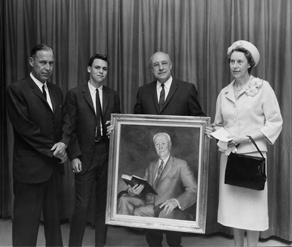
When the State College of Washington opened in 1892, Pullman was hardly a dot on the Washington map with a whopping population of 350. The School of Education was started in 1907 and offered courses for three types of students:
- Majors from other departments who were studying education or psychology for informational value
- Education majors who wanted to teach in secondary schools
- Prospective principals, supervisors and superintendents
As each new year starts, it’s easy to see that change has been a constant during more than a century of Washington State University education programs. Although often challenging, and sometimes sad, it is change that has helped the college keep up with professional advancements and cultural expectations.
Here is a glimpse of the College of Education evolution. The images and research assistance are courtesy of the WSU Libraries’ Manuscripts, Archives, and Special Collections.
From the start, the School of Education’s course offerings included just what you’d expect: traditional education. The school’s job was to train primary and secondary teachers and administrators.

In 1930, students wanting to teach in high schools were given a more structured program, which is still used. The program required students to select a teaching major and minor from an extensive list that included subjects such as English, chemistry, botany, or secretarial science.
In 1937 the school expanded the focus of its courses to serve six different classes of students:
- Prospective principals, supervisors, and superintendents
- Those preparing to teach in a junior or senior high school
- Teachers and administrators in service
- Candidates for advanced degrees in education
- Candidates for degrees in psychology
- Those wishing to take courses in education and psychology for their informational value
Simplicity was the goal in 1940, when the list of majors was slimmed down to teaching, psychology and agriculture education. Education, like many other departments at the ag-focused college, included agriculture options. Agriculture education students were expected to take two years of classes in the College of Agriculture and then spend their junior and senior year in the School of Education.

Washington State College became Washington State University in 1959 (This was the same year that the course catalogs began to use “the student” rather than “he/him” when referring an enrollee.). In 1962, the School of Education was first called the College of Education, as noted in the university course catalogs.
In 1964 the Board of Regents consolidated the College of Education into three departments:
- Department of Education
- Department of Physical Education for Men
- Department of Physical Education for Women
The structure of departments remained steady until the mid 1980s when the College expanded to include new areas of study. The college organized into five departments in 1985, the first year that men’s and women’s physical education programs were combined.The new departments were:
- Education
- Physical Education
- Sport and Leisure Studies
- Vocational Technical Education and programs in Adult and Continuing Education
- Industrial Technology

Just two years later, in 1987, new divisions were added and the departments were reconfigured again as:
- Counseling Psychology
- Educational Administration and Supervision
- Elementary and Secondary Education
- Physical Education
- Sport and Leisure Studies
For years, WSU had a Department of Education within the College of Education that was once known as the School of Education. The redesign in 1987 alleviated some confusion by creating specific educational departments rather than one generalized education division.
In 1989, there was organizational change outside of the College of Education that greatly increased its impact. The Washington Legislature created WSU’s Spokane, Tri-Cities and Vancouver campuses. Education programs have thrived on each new campus, tailored to each region’s needs and led by academic directors who report to the College of Education dean (although Vancouver and Tri-Cities have budgets that are separate from Pullman/Spokane).
Within the college, the next big structural change came in 1998, when the five departments were downsized into three:
- Educational Leadership and Counseling Psychology
- Kinesiology and Leisure Studies
- Teaching and Learning

A final reorganization in 2002 led to the creation of the College of Education’s current two-departments:
- Educational Leadership and Counseling Psychology
- Teaching and Learning
A name change would turn one of the departments into Educational Leadership, Sport Studies, and Educational/Counseling Psychology.
In 2006, the Education Addition was built adjacent to Cleveland Hall, which helped with the college’s growing student population.
College Growth and degree programs offered run parallel
The WSU course catalogs’ first mention of advanced education degrees was in 1919. Along with the four-year program that resulted in a Bachelor of Arts in education, the college also offered a Master of Arts in Education in the following fields:
- State & County Administration
- Educational Classics
- Educational Psychology
- Seminar in Education Measurements
- Vocational Guidance
- Educational Research
- Foreign Education Systems
As the identity of the college developed, more advanced degrees were offered. Those included a Doctorate in Education and Philosophy added in 1956. Along with the doctoral degrees, the bachelor and master’s degree programs were expanded to include:
- Bachelor of Arts in Education or Industrial Arts
- Bachelor of Science in Agriculture Education
- Master of Science in Agriculture Education or Industrial Arts Education
- Master of Education
- Master of Arts in Education
The creation of advanced degree programs often came with changes in departmental structure. By 1998, there were bachelor’s, master’s, and doctoral degrees offered in multiple departments.
Timeline of events
1892
The university in Pullman opened its doors as the Washington Agricultural College and School of Science, with 13 collegiate and 46 preparatory students.
1907
Instruction in education began in November. That coincided with the arrival of Alfred Alexander Cleveland. The Oregon native joined the faculty of the, then, State College of Washington as an assistant professor of psychology. Between 1908 and 1910 he became full professor and then temporary head of the combined education and psychology department.
“The object … shall be to train teachers of physical science and thereby further the application of principles of physical science to industrial pursuits” — 1909-1911 course catalog
1917
Washington State College was reorganized into five colleges and four schools with deans as administrative heads. A.A. Cleveland’s responsibilities then included the deanship of the School of Education and directorship of the annual Summer Session, which played an important role in enlarging the formal training of primary and secondary teacher in Washington.
1919
Degrees offered: Bachelor of Arts in Education; Master of Arts in Education (specializations in state and county administration, educational classics, educational psychology, education measurements, vocational guidance, educational research, foreign educational systems)
1930
Students preparing to teach in a senior high school were required to complete at least one teaching major and one teaching minor.
1940
The three education academic paths were teaching, psychology, agriculture education (two years of classes in the College of Agriculture, then junior and senior years in the School of Education).
1941
J. Murray Lee became the second dean. He arrived at WSU in January from the University of Wisconsin, where he had been and scholar, teacher, and consultant to educational groups.
1949
Camp Easter Seal was established on Lake Coeur d’Alene by Professor Roger Larson. The camp, operated by the College of Education provided recreation for children with disabilities until its closure in 2003.
1954
Zeno Katterle assumed the role as dean. He retired in 1964.
1959
Washington State College became Washington State University, as designated by the Legislature.
1962
The WSU 1962-’64 course catalog was the first to refer to the College of Education, rather than the School of Education. The college’s new home, Cleveland Hall, was dedicated in May 1962.
1963
The Board of Regents divided the College of Education into three departments: Education, Physical Education for Men, Physical Education for Women.
1964
George Brain was named dean of the College of Education. He held this position until 1983 and became widely known for his influence on the placement of superintendents around the state of Washington. Before being merged centrally in the Holland/Terrell Libraries, the education library in Cleveland Hall (now the Math Learning Center) was named in his honor.
1967
The WSU High School Equivalency Program (HEP) was created within the college. The comprehensive residential program allows seasonal and migrant farm workers or their dependents to obtain high school equivalency certificates. It was the longest continuously active federal equivalency preparation program in the United States until its closure in 2009.
1970
The college continued to build a national identity. Its teacher education curricula were accredited by the National Council for Accrditation of Teacher Education. It became a member of the American Association of Colleges for Teacher Education and the University Council on Educational Administration.
1976
The college received a $1 million grant from the Kellogg Foundation to create the Partnership for Rural Improvement.
1984
M. Stephen Lilly became dean of the college, serving until 1990.
1985
The WSU course catalog listed five College of Education departments: Education, Physical Education, Sport and Leisure Studies, and Industrial Technology.
1987
College of Education departments were: Counseling Psychology; Educational Administration and Supervision; Elementary and Secondary Education; Physical Education, Sport, and Leisure Studies.
1989
The Legislature creates WSU campuses in Spokane, Tri-Cities, and Vancouver, whose offerings would include degrees from the College of Education.
1991
Bernard Oliver was named dean. His six-year tenure saw the creation of the Future Teachers of Color program in the college.
1994
The Center for Educational Partnerships was created to increase College of Education collaboration with teachers and administrators, as well as school districts, social service agencies, businesses and communities. It was later renamed the School and Community Collaboration Center. The Department of Physical Education and Leisure studies was moved to Education Administration and Supervision.
The college was reorganized into three departments: Educational Leadership and Counseling Psychology, Teaching and Learning, and Recreation and Leisure Studies. That arrangement lasted until 2001, when RLS is dropped.
1998
Judy Nichols Mitchell became the seventh dean of the College of Education. She previously served as faculty member and department chair during her 22-year career at the University of Arizona.
2002
The College of Education was divided into the Department of Educational Leadership and Counseling Psychology (which included kinesiology and sport management), and the Department of Teaching and Learning.
The 31st recipient of the Regents’ Distinguished Alumnus Award was WSU graduate and sociologist James E. Blackwell. He was a leading scholar in the areas of minorities in higher education and social movement in black communities.
2005
Students, faculty and staff participated in relief efforts for Asian countries struck by a December tsunami. Later in the year, they reached out to victims of two hurricanes that hit the U.S. Gulf Coast. More than 7,000 Backpacks for Hope—filled with school supplies, books and other items—were collected for students in the affected areas.
2005
The Education Addition opened adjacent to Cleveland Hall. The new building provided a seamless integration of technology, modeling how students will use technology in their own classrooms when they become teachers.
2006
The Future Teachers of Color program was restructured as the Future Teachers and Leaders of Color program to more broadly support the graduate students of the College of Education.
2007
100 years after the first teacher education class is held in Pullman, a “Legacy Tree” wall sculpture was installed in the walkway between Cleveland Hall and the Education Addition, allowing the public to honor educators who have made a difference in the lives of their students.
2010
Anthony G. (A.G.) Rud, Jr., is named the eighth dean of the College, succeeding the late Judy Mitchell. An educational philosopher, he was previously head of the Department of Educational Studies at Purdue University.
2013
Mike Trevisan appointed dean on April 3, succeeding A.G. Rud. An educational psychology expert, Trevisan served as associate dean for research and external funding, as well as the head of WSU’s Learning & Performance Research Center.
The Department of Educational Leadership and Counseling Psychology is renamed as the Department of Educational Leadership, Sport Studies, and Educational/Counseling Psychology (ELSSECP).
The Future Teachers and Leaders of Color program is renamed as the Alhadeff Future Teachers of Color.
2019
Under the leadership of dean Mike Trevisan, the college successfully petitioned the Board of Regents to divide one of its departments (ELSSECP). Following the Regents’ approval on May 3, in addition to the longstanding Department of Teaching and Learning, the college began hosting the Department of Kinesiology and Educational Psychology, as well as the Department of Educational Leadership and Sport Management.